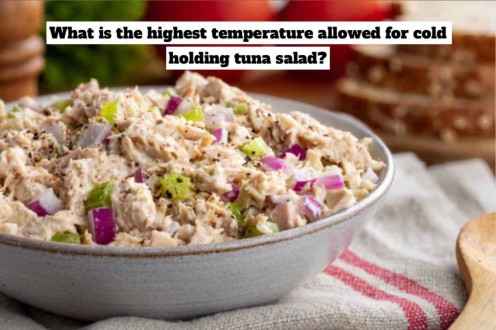
If you are wondering, what is the highest temperature allowed for cold holding tuna salad? Then you aren’t alone. Well, The highest temperature allowed for cold-holding tuna salad is 41°F (5°C). This temperature is provided by FDA Food Code cold-holding standards. People in restaurants, cafes, schools, and other food service operations follow this temperature to keep the food safe from harmful bacterial growth.
This temperature limit is also applicable for home storage because keeping tuna at 41°F reduces the risk of bacteria like listeria, which can later cause foodborne illness. If your tuna salad looks fine at a temperature above the recommended one, then it may still contain bacteria.
What Does “Cold Holding” Mean in Food Safety?
Cold holding is a food safety practice that everyone does in the food department. In easy words, it means keeping food items that can go bad without cold temperatures, such as tuna salad, at 41°F (5°C) or below. This will reduce the risk of harmful bacteria. The temperature doesn’t work as a long-time preservative, but it helps in maintaining a safe temperature from the time of tuna salad preparation to serving.
This temperature practice is strictly used by restaurants and catering in all parts of the world; the same temperature rule is also recommended for homemade tuna salad.
Cold Holding vs. Similar Food-Safety Terms
Many people, especially someone who is new to tuna salad storage, confuse holding with other chilling practices. So let’s look at how they are different.
Cold Storage
It means a food item refrigerated for a long time. Cold storage is used after preparation and before use for salad, etc. The main focus is to keep tuna salad consistently below 41°F for days.
Cold Display
It means a short-term cold holding while food is visible and available, for example, buffet lines, deli cases, and salad bars. Cold display just needs active temperature because food is interacting with warmer air.
Temporary Cold Holding
Long periods when food is kept cold outside refrigeration. The food depends on ice, ice packs, or refrigerated pans; however, time and temperature may vary.
Why This Matters for Tuna Salad?
Tuna salad is a ready-to-eat food item; once it is made, you can’t reheat it to kill bacteria. That’s why understanding cold holding and other freezing methods is important to avoid food-borne illness.
Why Tuna Salad Is Considered a High-Risk Food
Well, the main reason behind considering tuna as a high-risk food item is that tuna is a protein-based item, which means the growth of bacteria is possible, especially when it isn’t kept cold.
As we already know, tuna salad is completely based on tuna, which is a protein, vegetables, and dressing, which includes moisture and mayonnaise or creamy binders. All these ingredients are a perfect environment for bacterial growth and even multiply existing bacteria, especially if you keep the tuna salad above 41°F (5°C). Tuna salad can spoil faster as compared to any other dry food item because it includes moisture and protein, which can become unsafe easily.
Ready-to-Eat Food With No “Kill Step”
Tuna salad is a ready-to-eat food item, which means everything in it is already cooked and can’t be cooked again. There is no reheating, which means no bacterial killing. When bacteria interact with salad during its making, mixing, handling, or storage process, they don’t kill unless you discard the food item. This is why cold holding temperature is important.
Common Bacteria Linked to Tuna Salad
When the tuna salad isn’t stored properly at the recommended temperature, then it can lead to the growth of harmful bacteria such as
Salmonella: Plays an important role in causing diarrhea, fever, and stomach cramps
Listeria monocyte genes: It is one of the dangerous bacteria, especially for pregnant women, older adults, and people with sensitive stomachs.
Staphylococcus aureus: It can produce toxins that won’t go away even after reheating a food item.
All these bacteria won’t change the smell, taste, or texture of your food; however, they can cause stomach issues.
Why 41°F (5°C) Is the Safety Limit (Science Explained)
The 41°F (5°C) temperature restriction isn’t something random, but it is completely based on how bacteria react in food. All food safety guidelines from different authorities recommend this temperature limit because it marks the point at which bacterial growth starts to increase rapidly.
The Temperature “Danger Zone” Explained
The danger temperature zone where bacteria grows fast includes 41°F to 135°F (5°C to 57°C). In this range the bacteria doubled in numbers in just some minutes. If the tuna salad enters this danger temperature, the bacteria in it start doubling, which leads to foodborne illness when consumed.
What Happens Above 41°F?
The food authorities recommended the temperature at or below 41°F (5°C) because the bacterial growth became low and food stayed safe for a long time.
When the temperature is above 41°F, the growth rate of bacteria increases, and food can’t be safe for a long time.
Why 44°F Is NOT Safe (Even Though It Seems Close)
Many people don’t take the recommended temperature seriously; they say a few degrees warmer won’t matter, but in reality, in
44°F (6.6°C) The bacterial growth became fast because people open the fridge many times in a day, which makes the temperature fluctuate. The increase in temperature from the recommended one can lead to major bacterial growth, and the food becomes unsafe to consume, especially high-risk foods like tuna salad.
FDA Food Code Guidelines for Cold-Holding Tuna Salad
The safety standard for cold holding tuna salad comes from FDA Food Code §3-501.16. This means to always use the time and temperature recommended by food authorities, especially when it comes to perishable food items like tuna salad.
According to the FDA Food Code Guidelines, cold food like tuna must be at 41°F (5°C) or below; this will slow down the growth of bacteria, which indirectly reduces the risk of foodborne illness. Food items like tuna salad need to be stored in the fridge at this temperature because they have ingredients that contain bacteria.
Where FDA Cold-Holding Rules Apply
The FDA Cold-Holding Rules apply to all national foods, especially those food items that can’t stay longer without refrigeration. This rule is followed by people from restaurants like delis, diners, fast-food outlets, salad bars, and cold-display cases.
In catering operations the rule is strictly followed, for example, in buffets, events, banquets, temporary food service, transport coolers, and ice baths.
In schools & hospitals, like school cafeterias, healthcare food services, senior care, and assisted-living facilities
State Adoption of the FDA Food Code
The FDA food authority can’t expect every restaurant in different states of the country to follow the FDA Food Code; however, many U.S. state and local health departments adopt the FDA Food Code. The cold holding rule of setting temperature at 41°F (5°C) is compulsory in many locations.
Cold-Holding Tuna Salad at Home vs. Food Service
At Home
- Set your refrigerator at ≤ 40–41°F
- Make sure to place tuna salad in the cold and warm area of the fridge instead of the door.
- Always store tuna salad in an airtight container so it cools evenly.
- Keep the container at the back of the fridge where the cooling is good.
In Restaurants or Catering
- Try to check the temperature of the fridge continuously or after hours.
- Use ice beds, refrigerated prep tables, or cold-display units
- If the temperature somehow exceeds the recommended limit, then correct it immediately.
How Long Can Tuna Salad Be Safely Held at 41°F?
At the recommended temperature that is 41°F (5°C) or below, tuna salad lasts for 3 to 5 days in the refrigerator. This temperature limit guideline applies to both food services like restaurants and home kitchens.
A chilled tuna salad is still a high-risk food item, which means cold temperatures slow down bacteria growth but won’t stop it completely because the time starts when you were preparing the salad, not when you put the salad inside the fridge.
When to discard tuna salad
Many people have a question in mind: when to toss it sooner? Well, you can discard tuna salad in days if you notice any sign that it has gone bad, meaning it smells sour or fishy. If you notice any watery, mushy, or slimy texture. Any discoloration or separation and mold anywhere on the surface of the container.
What Happens If Tuna Salad Goes Above 41°F?
When you put tuna salad above 41°F (5°C), it enters the danger zone, which means the range where bacteria growth increases rapidly; however, it also depends on how long the tuna stays in the danger zone temperature.
Short Exposure (Under 2 Hours): Usually Still Safe
If the tuna salad is kept above 41°F for less than 2 hours, then it can be cooled back down to 41°F and return to cold-holding conditions. This situation can be applicable when you continuously open the fridge door, use buffet service, or are in a quick transport period.
Extended Exposure: Risk Rises Quickly
If you let tuna salad stay above 41°F for more than 2 hours, then bacteria in it can increase rapidly, which means it is completely unsafe now.
For example, at 70–90°F, bacteria can double every 20–30 minutes. Bacteria like Salmonella or Staphylococcus aureus produce toxins that remain in the food even after you put tuna again at the recommended temperature.
2-Hour rule
According to food safety guidelines, if your tuna food stays above 41°F for more than 2 hours, it is advisable to discard it.
1-hour rule (high heat environments)
If tuna salad is kept at a temperature of 41°F for more than 2 hours, then discard it after 1 hour. This range of temperature is mostly found in outdoor catering or hot kitchens.
When You MUST Discard Tuna Salad( based on temperature)
- If tuna salad stays above 41°F for more than 2 hours, then discard it.
- If you forget to put tuna salad in the refrigerator for hours, then discard it.
- If you left tuna salad in warm weather for many hours, then it is best to discard it.
- If you are unsure about the fridge temperature or time, then discard it.
Best Practices to Keep Tuna Salad Below 41°F (5°C)
- Use a calibrated fridge thermometer to make sure the temperature is 40–41°F (4–5°C) or below because sometimes fridge dials aren’t correct.
- Make sure to store tuna salad in a cool airtight container to maintain safety and get enough cooling inside it.
- Make sure to store the container at the coldest place where it can get enough cooling.
- If tuna salad is a part of school lunches, catering, or taking food to work, then use ice packs or insulated bags for transport to keep tuna salad at a safe temperature.
- Make sure to mix salad well before storing it because it will help salad to cool faster.
- Don’t depend on just a different smell, taste, or texture when it comes to food safety, as harmful bacteria can grow without producing any smell or taste change.
- Always check the temperature during buffets, catering, and event services to keep tuna salad safe for longer.
Also Read: Can You Eat Expired Chips Safely? Myths, Facts & Storage Tips
Common Cold-Holding Mistakes to Avoid
Following are some common mistakes to avoid when storing tuna salad.
1. “It was only out for a few minutes.”
Avoid taking out tuna salad for some minutes and then again refrigerating it because short interaction with warm room temperature can make tuna unsafe, especially if it’s in large batches.
2. Overloading the refrigerator
Packed fridges restrict airflow. Warm spots form, and foods like tuna salad may rise above 41°F before you realize.
3. Storing tuna salad in deep containers
Avoid deep bowls to store tuna salad because they can hold heat and make it hard for cooling to enter them quickly.
4. Assuming mayonnaise is shelf-stable once mixed
A separate mayo bottle is completely safe, but when it is mixed in tuna salad, which includes veggies and moisture-rich ingredients, then the salad becomes sensitive food, which definitely needs to be refrigerated.
5. Not monitoring temperatures during transport or service
People usually don’t pay attention to temperature, especially in lunchboxes, catering trays, and buffets, where the temperature can go above 41°F quickly if not supported with an ice bag or refrigerator.
6. Believe your fridge is always safe
Many people assume the fridge temperature remains the same for hours, but in reality it fluctuates during door openings, power outages, when it contains many items, and when it is older So it is important to use a thermometer to note the correct temperature.
7. Ignoring the 2-hour rule
If tuna salad has been above 41°F for more than 2 hours (or 1 hour if above 90°F), according to the rules, you have to trash it without having any second thoughts.
Why Cold Holding Tuna Salad Is a Must for Food Safety
Below are some guidelines that should be taken to ensure that instances of foodborne infections are reduced and foods such as tuna salad are kept at low temperatures. The main reasons are listed below:
Food Safety: Being aware of the time is another thing; however, tuna salad should be kept at the appropriate temperature to avoid the expansion of dangerous bacteria and according to FDA standards. Its consumption containing bacteria could result in serious illness.
Preservation of quality: Any preparation of tuna salad is more enjoyable when it is made cold, particularly because it improves the quality and safety of the food. Omitting it means that the tuna salad will be all mushy, while the vegetables will also be all wilted.
Refrigerating your tuna salad is a must and is strongly advised. Food safety laws and regulations must be followed in order to prevent legal problems in the food sector.
Legal compliance: Storing your tuna salad is rather important and suggested, particularly when retaining the quality of your food in the kitchen for some time. Any food business must adhere to the food hygiene legislation to minimize the chances of legal problems.
Customer trust: Those customers, who often eat fast food, expect the restaurant to maintain the quality as well as the sanitary condition of the food.
Frequently Ask Questions by People
What is the highest temperature allowed for cold-holding tuna salad?
According to the FDA requirements, exhibit ‘A’ tuna salad should not be kept at a temperature not below 41°F (5°C). This point suggests that tuna salad should be kept in a refrigerator, or its temperature should be below 41°F or 5°C to remain safe for human consumption.
What tempreture is dangerous for cold-holding tuna salad?
Food will be unsafe for humans to consume when the germs get onto it and the temperature of the food goes up to 41°F (5°C), as the germs will breed fast.
What is Quick Cooling?
The product must be cooled from its final cooking temperature of about 75°C to 4.4°C in a relatively short time to prevent bacterial growth, thus holding the tuna salad at 41°F. Cooling ensures that the tuna salad does not overcook since it has to be served cold.
Is Pre-chilling the ingredients a good idea?
Yes, It not only optimizes the procedure and quality of the tuna salad but also enhances the food hygiene since the tuna, vegetables, dressing, and other ingredients have to be stored in different containers in the refrigerator.
How Foodborne Illnesses’ Effects Clients and Businesses?
Poor consumers who get foodborne diseases may be among those who face severe consequences, including hospitalization or life-threatening illnesses. These illnesses may lead to the loss of customers and thus revenue, fines, lawsuits, and possibly closure of firms.
How Improper Cold Holding Temperatures Threaten Food Safety?
Lack of proper cold storage temperature kills bacteria that are hazardous to health when consumed in foods such as tuna salad. These risks impact both public health and business operations, increasing the likelihood of foodborne illness outbreaks.
How long does it take to cool from 135 to 70 degrees safely?
After food has been cooked and held on a kitchen warmer, it’s essential that it maintains a temperature above 60°C (140°F) to ensure food safety. This standard should be consistently monitored and maintained.
The food microorganisms reproduce and result in food poisoning when it is kept at a temperature of less than 140°F.
Is Reheating Tuna a Good Idea?
Reheating tuna is both safe and simple. It’s a common practice, especially in dishes such as tuna casseroles, where previously chilled tuna is warmed for serving. Canned tuna is typically pre-cooked during the canning process, so reheating it is usually just to bring it to your preferred serving temperature. It is suggested to make sure that raw or thawed tuna achieves a safe internal cooking temperature of 145°F or 63°C to eliminate bad bacteria.
What are the factors that impact Cold Holding of Tuna Salad?
When tuna salad is being cold-held, a few things can influence its temperature, including:
- Inadequate methods of refrigeration or storage
- Frequent openings of the storage container or refrigerator
- inadequate techniques for temperature control or insulation.
How to reheat Tuna Safely?
There are various ways through which tuna can be reheated, and some of them include microwave, stovetop, and oven. It is important to remember that a microwave-safe container should be used when heating; also make sure to stir from time to time to ensure equal heat distribution. To avoid drying out the tuna or making it hard, do not overcook it when cooking using a stove or an oven. Tuna that has been cooked and then left to cool and be refrigerated should also be reheated to at least 165°F (74°C) as a measure of safety.
Last Words: What is the highest temperature allowed for cold holding tuna salad?
It is crucial to know: What is the highest temperature allowed for cold-holding tuna salad?
This way, you can decrease the risk of foodborne pathogens and provide eaters with fresh and safe tuna salad—hold it at 40°F (4°C) or lower and follow these general rules of cold food storage.
Remember that it is always important to maintain the correct temperature to prevent bacterial growth, especially for perishable food items like tuna salad.
Medical Disclaimer
This article is just for informational purposes only and should not be considered medical advice. Always consult with a healthcare professional before making any changes to your diet, exercise routine, or healthcare plan.